
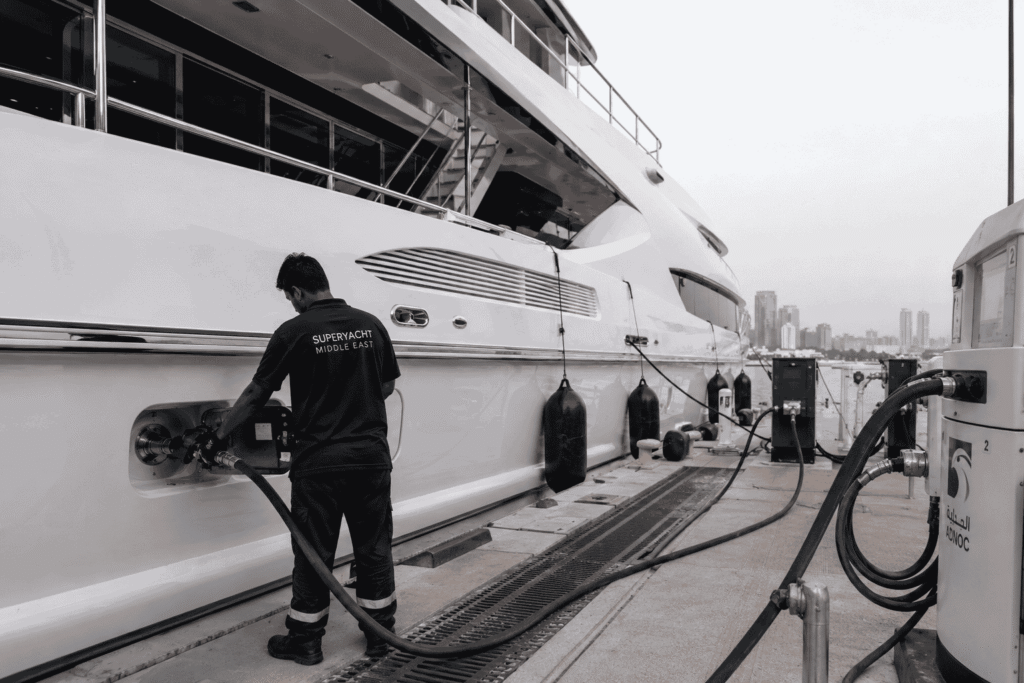
Yacht fuel management tips are essential to yacht operations in the UAE. They involve planning fuel consumption, coordinating bunkering schedules, and ensuring quality and compliance with local regulations.
Understanding how fuel is managed helps yacht owners, captains, and crew avoid delays, reduce costs, and maintain smooth operations. With structured support from providers like Superyacht Middle East™, these steps can be handled clearly and organised, including access to reliable services such as bunkering solutions for yachts.
What Is Yacht Fuel Management?
Yacht fuel management refers to the process of planning, monitoring, and controlling fuel usage on board. This includes tracking consumption, scheduling refueling, and ensuring fuel quality meets operational standards.
In the UAE, this typically involves coordination among marinas, fuel suppliers, and port authorities to ensure smooth, compliant bunkering operations.
Why It Matters in Yacht Operations
Fuel is one of the most critical operational elements on a yacht. Without proper planning, vessels may face unexpected shortages, higher costs, or delays in their itinerary.
In busy ports like Dubai and Abu Dhabi, efficient fuel planning helps maintain schedules and ensures that all operations run without interruption.
Applying the right yacht fuel management tips also helps improve engine performance, reduce waste, and enhance overall operational efficiency.
How the Process Works
Fuel management on yachts usually follows a structured process:
- Fuel planning: Estimating fuel requirements based on itinerary, weather conditions, and cruising speed.
- Supplier coordination: Arranging refueling with trusted suppliers at the right port and time.
- Quality checks: Ensuring fuel meets required standards before bunkering.
- Monitoring consumption: Tracking fuel usage during operations to avoid inefficiencies.
- Refueling operations: Conducting safe and compliant bunkering procedures.
- Post-bunkering checks: Verifying quantities and documenting fuel intake.
Key Challenges to Be Aware Of
Managing fuel on a yacht comes with several practical challenges:
- Fluctuating fuel prices across ports
- Limited availability during peak seasons
- Ensuring consistent fuel quality
- Coordinating refuelling within tight schedules
- Handling last-minute itinerary changes
These issues can disrupt operations if not managed carefully. That’s why following effective fuel management practices is essential.
Common Fuel Mistakes to Avoid
Even experienced crews can face issues if fuel is not managed properly. Some common mistakes include:
- Poor planning of fuel requirements: Underestimating fuel needs can lead to emergency refuelling situations.
- Ignoring fuel quality checks: Low-quality fuel can damage engines and increase maintenance costs.
- Delaying bunkering schedules: Waiting too long can limit supplier options and increase costs.
- Overloading fuel tanks: Carrying excess fuel adds unnecessary weight and reduces efficiency.
- Lack of consumption tracking: Without monitoring, it becomes difficult to optimise usage.
Avoiding these mistakes is a key part of applying practical yacht fuel management tips effectively.
How Superyacht Middle East™ Supports This Process
Superyacht Middle East™ supports vessels across all stages of fuel planning and bunkering. This includes pre-arrival coordination, supplier communication, and operational support during refuelling through its comprehensive port agency service in the UAE.
The team works closely with trusted fuel providers and port authorities to ensure that fuel quality, timing, and documentation are handled efficiently.
By managing these details, Superyacht Middle East™ helps reduce operational pressure on the crew and ensures a smoother bunkering process.
Practical Tips for Better Fuel Management
To improve efficiency and avoid common mistakes, consider these simple tips:
- Plan fuel needs based on the full itinerary
- Schedule bunkering in advance, especially during peak seasons
- Always verify fuel quality before refueling
- Monitor fuel consumption regularly
- Avoid carrying unnecessary excess fuel
- Work with experienced local service providers
Applying these fuel efficiency tips for yachts can help reduce costs and improve overall performance.
A Clearer Way to Manage Yacht Fuel Operations
Fuel management is a key part of maintaining efficient yacht operations in the UAE. From planning and supplier coordination to quality checks and monitoring, each step plays an important role.
By following structured yacht fuel management tips and avoiding common mistakes, vessels can operate more efficiently and reduce unnecessary risks.
With experience across UAE ports, Superyacht Middle East™ helps ensure that fuel-related operations are handled in a clear, organised, and reliable way.
FAQ Section
What type of fuel do superyachts use?
Modern superyachts require reliable bunkering logistics, and the most common fuel options are Automotive Gas Oil (AGO), Marine Gas Oil (MGO), and Marine Diesel Oil (MDO)
Where are the best refuelling locations for superyachts in the UAE?
In Dubai, commonly used refuelling locations include Port Rashid, Dubai Harbour, and Jumeirah Beach Marina. These locations offer a mix of bulk fuel supply and marina-based refuelling options depending on vessel size.
In Abu Dhabi, yachts typically refuel at Zayed Port, Yas Marina, and Saadiyat Marina. Each offers different levels of capacity and convenience based on operational needs.
How often should a yacht refuel in the UAE?
This depends on the yacht’s itinerary, fuel capacity, and usage. Most yachts plan refueling based on trip duration and consumption rates to avoid last-minute delays.
Do I need a yacht agent for bunkering?
While not mandatory, working with a yacht agent simplifies coordination with suppliers and port authorities. It helps ensure timely and efficient refuelling operations.
What should be checked before bunkering?
Key checks include fuel quality, supplier reliability, documentation, and correct fuel quantity. These steps help prevent operational issues later.
- By Mohamed Nada


